When most travellers think of a wildlife holiday in Rajasthan, one name dominates the conversation — Ranthambore. But tucked away just a couple of hours from the tiger country lies an experience that is quieter, wilder, and in many ways more extraordinary: the Chambal Safari. Gliding along the ancient Chambal River in a small wooden boat, surrounded by ravines carved over millennia, watching a gharial slide silently into the water — this is a wildlife encounter that leaves a permanent mark.
The Chambal River is one of India’s cleanest and least disturbed river systems, and it supports a biodiversity that most people do not know exists this close to a popular tourist circuit. For those visiting Ranthambore Nature Camp — located just 2 kilometres from Ranthambore’s main gate — the Chambal Safari is a natural and highly recommended extension to the classic jungle safari experience. Together, these two safaris give you the most complete picture of wildlife that the Sawai Madhopur region has to offer.
In this complete guide, we cover everything you need to know before booking your Chambal Safari — the wildlife, the best time to visit, what to expect on the boat, and how to make the most of this once-in-a-lifetime experience.
What is a Chambal Safari and Why is it So Special?
A Chambal Safari is a river boat safari conducted along the National Chambal Sanctuary — a protected stretch of the Chambal River that runs through the states of Rajasthan, Madhya Pradesh, and Uttar Pradesh. Unlike a jeep safari through a dense forest, the Chambal Safari takes place on the water, offering an entirely different perspective on Indian wildlife.
The sanctuary was established primarily to protect the critically endangered gharial — a long-snouted, fish-eating crocodilian that exists nowhere else on Earth in significant numbers. But over the decades, the Chambal River has also become a refuge for the mugger crocodile, the Gangetic river dolphin, the Indian skimmer, and dozens of migratory bird species that descend on the riverbanks every winter. What makes this river particularly special is that it has remained largely free from industrial pollution and heavy agriculture — a rarity in modern India — which ha
Wildlife You Can Spot on a Chambal Safari
The range of species visible during a Chambal Safari is genuinely extraordinary. Here is what you can look forward to encountering on the river:
The Gharial — A Living Fossil
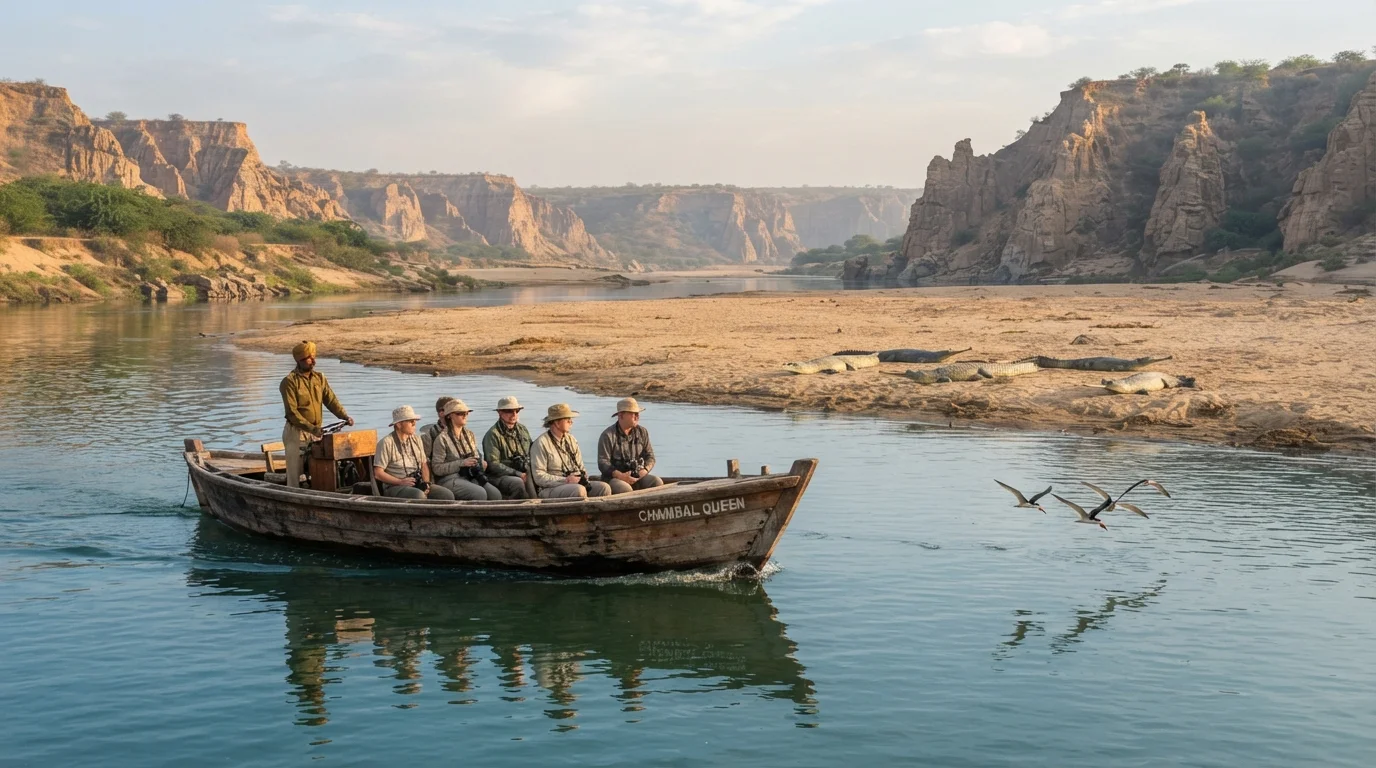
The gharial is the undisputed star of the Chambal Safari. With its narrow, elongated snout and the distinctive bulbous growth — called a ghara — on the male’s nose, the gharial is one of the most visually unique reptiles alive today. The Chambal River is currently home to the world’s largest wild gharial population, making this stretch of river one of the most important conservation zones on the planet. Watching a group of gharials basking on a sandbank in the early morning sun, motionless as statues until the boat draws near, is a sight that stays with you for years.
The Gangetic River Dolphin — India’s National Aquatic Animal
India’s national aquatic animal is also found in the Chambal’s waters — the Gangetic river dolphin. Nearly blind and navigating entirely by echolocation, these freshwater dolphins are rarely seen in the wild by most Indians. The Chambal is one of the few rivers where their population remains stable. Spotting a dolphin’s arched back breaking the surface of the river during a Chambal Safari is a rare and deeply moving moment — one that wildlife lovers travel specifically to witness.
Birds of the Chambal — A Birdwatcher’s Paradise
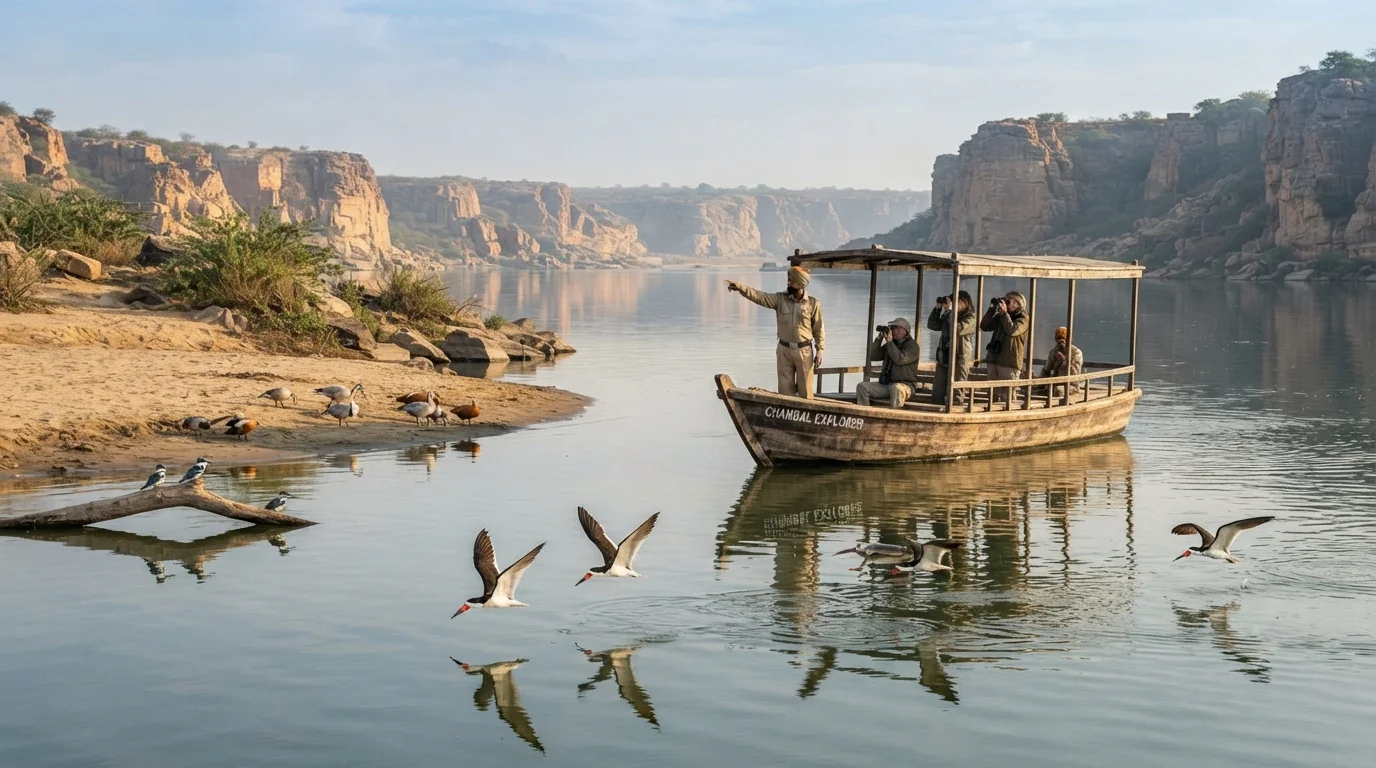
The Chambal River corridor attracts over 300 species of birds, making it one of the finest birding destinations in North India. The Indian skimmer — a striking orange-and-white bird that skims the water surface with its lower mandible to catch fish — nests exclusively on the Chambal’s sandbanks. You will also spot sarus cranes (the world’s tallest flying bird), black-necked storks, bar-headed geese, red-crested pochards, and several species of kingfisher on a single Chambal Safari.
Mugger Crocodiles and Other River Residents
Alongside the gharial, the mugger crocodile — a broader-snouted, more aggressive species — is also a common sight along the Chambal’s banks. Indian softshell turtles, the red-crowned roofed turtle (another critically endangered species), and monitor lizards are regularly spotted during the boat journey. The overall diversity of reptiles, mammals, and birds visible on a single Chambal Safari is often enough to fill an entire wildlife photography portfolio.

Best Time to Visit for a Chambal Safari
The Chambal Safari is conducted throughout most of the year, but certain months offer dramatically better wildlife sightings than others. October to March is considered the peak season. The winter months bring thousands of migratory birds to the river, the water levels drop to reveal more sandbanks where gharials and turtles bask, and the cool temperatures make the boat journey genuinely comfortable.
November and December in particular are exceptional months — the river is calm, the light is golden, and wildlife activity is at its peak. For birdwatchers, January and February see the highest concentration of migratory species. If you are visiting Ranthambore during this period, combining your Chambal Safari with a Ranthambore jungle safari and a visit to local sightseeing attractions makes for a perfectly rounded trip.
The monsoon season — July to September — sees heavy rainfall that makes boat travel on the Chambal difficult and sometimes unsafe. Safaris are typically suspended during this period. April to June is manageable but hot; wildlife sightings are still good during the early morning hours, and the reduced tourist footfall can make the experience feel more private and intimate.
What to Expect During the Chambal Safari
The Chambal Safari is typically conducted in small, flat-bottomed wooden boats that hold between four to six passengers. Each boat is accompanied by an experienced naturalist guide and a boatman who knows the river’s currents, bends, and wildlife hotspots intimately. The safari usually lasts between two to three hours and covers a stretch of the river where wildlife activity is most concentrated.
The pace is unhurried and contemplative. Unlike a jeep safari where the vehicle can maneuver quickly to a sighting, the boat moves gently and quietly — and this silence is the safari’s greatest advantage. Animals on the riverbank are far less disturbed by a drifting boat than by a vehicle, which means sightings tend to be longer and more relaxed. Bringing binoculars and a camera with a good zoom lens is strongly recommended, especially for bird photography.
The Chambal River flows through dramatic ravine country — steep, eroded gullies of pale rock that are hauntingly beautiful in the early morning light. These ravines have historically been remote and inaccessible, which is precisely why the river’s ecosystem remained so pristine. Even if you do not spot every species on your wishlist, the landscape alone makes the Chambal Safari an extraordinary sensory experience.
How to Combine Your Chambal Safari with a Ranthambore Trip
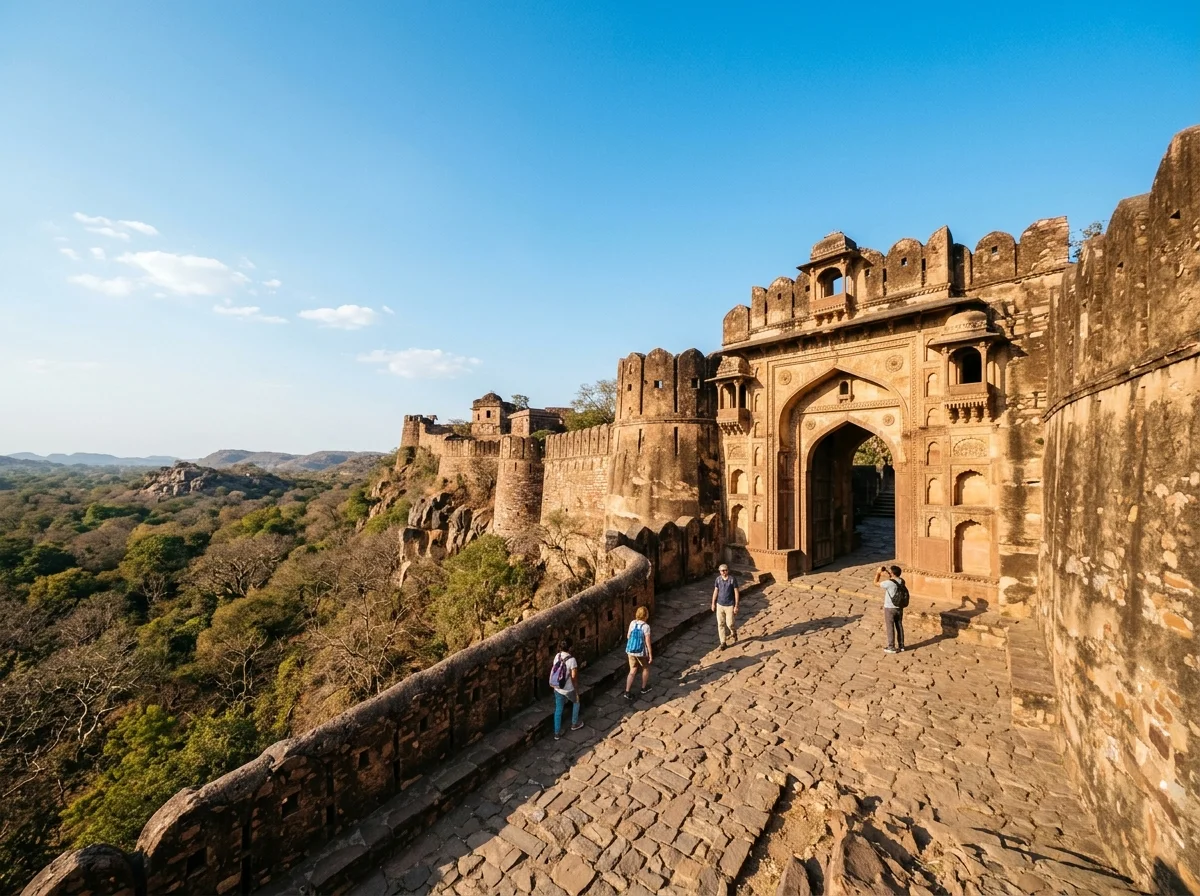
The ideal way to experience the Chambal Safari is as part of a longer Ranthambore itinerary. Staying for three to four nights gives you enough time to cover both the tiger country of Ranthambore and the river ecosystem of Chambal without feeling rushed. A typical itinerary from Ranthambore Nature Camp would include morning and evening tiger safaris, a half-day or full-day Chambal excursion, and an afternoon of local sightseeing — visiting the ancient Ranthambore Fort or the Trinetra Ganesh Temple — all woven together into a seamless wildlife and culture experience.
Our camp offers comfortable accommodation options to suit every traveller — from spacious Deluxe Rooms and Super Deluxe Rooms to our signature AC Swiss Tents that place you right in the heart of nature. Each option is fully air-conditioned and equipped with modern amenities, ensuring that your rest is as memorable as your adventures. Our team assists with all safari bookings — including the Chambal boat safari — so you can focus entirely on the experience.
To learn more about who we are and what drives our commitment to responsible wildlife tourism, visit our About Us page. You can also explore our photo gallery to see the kind of wildlife and landscape moments our guests regularly bring home from their Chambal and Ranthambore safaris.
Essential Tips Before You Go on a Chambal Safari
Dress in neutral, earthy colours — greens, browns, and khakis blend into the riverscape far better than bright clothing and reduce the chance of startling wildlife. Carry a hat and sunscreen for the open boat, as the sun on the water can be more intense than it feels. Keep all camera gear securely strapped and your bags away from the boat’s edge. Avoid sudden movements or loud talking — the quieter the boat, the closer the wildlife will approach.
The Chambal is a protected sanctuary, and the rules are strict: no littering, no getting off the boat near wildlife, no flash photography, and no disturbance of nesting sites. These regulations exist to preserve the very experience you are there to enjoy. Responsible wildlife tourism is the foundation of everything that makes the Chambal Safari so special — honour it, and the river will reward you generously.
Book your safari in advance, particularly during the October–March peak season when slots fill up quickly. For seamless arrangements, our team at Ranthambore Nature Camp handles all Chambal Safari bookings alongside your stay. Reach out through our Contact Us page or check our latest posts on the Nature Camp Blog for seasonal updates and fresh wildlife reports from the field.
Conclusion: Let the Chambal Surprise You
India’s most magnificent wildlife does not always announce itself with a roar. Sometimes it slides silently into a river. Sometimes it glides inches above the water’s surface. Sometimes it simply basks on a sandbank in the golden light of a winter morning, utterly indifferent to your presence, ancient and unhurried. The Chambal Safari offers all of this — and it does so with a quiet intimacy that no jungle road can replicate.
Whether you are a wildlife enthusiast, a birdwatcher, a photographer, or simply someone who loves being close to nature in its most undisturbed form, the Chambal Safari belongs on your itinerary. Book your Chambal Safari with Ranthambore Nature Camp today and let one of India’s most special rivers reveal itself to you — one quiet bend at a time.