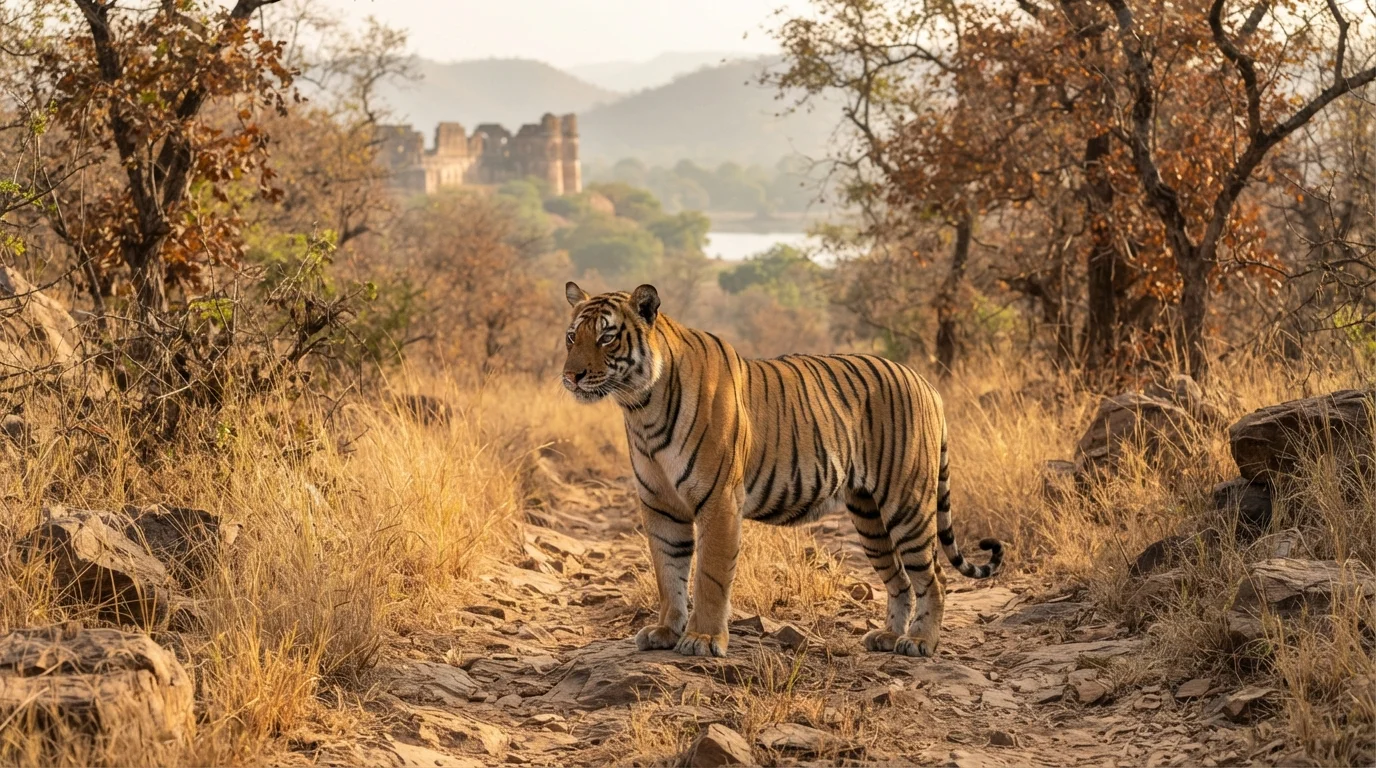
Every safari at Ranthambore begins with the same question whispered in the jeep: will we see a ranthambore tiger today? At Ranthambore Nature Camp, tucked among guava orchards just two kilometres from the main gate of Ranthambore Wildlife Sanctuary, we get to answer that question more often than most. You can read more about our camp and how it came to sit this close to the park. Over the past few seasons our guests have filmed tigers walking along the Rajbagh lakeside, resting near the ruins of Jogi Mahal, and even crossing the safari track a few feet from the vehicle. Those videos are the reason for this blog. If you have ever wondered exactly how many tigers are there in Ranthambore, which individuals are considered the park’s celebrities, and where your own sighting is most likely to happen, this guide pulls it all together.
How Many Tigers Are There in Ranthambore National Park?
Ranthambore National Park tigers are counted every year as part of India’s national tiger census, and the number has climbed steadily for two decades. Forest department estimates for 2026 put the Ranthambore tiger population in the range of 70 to 80 individuals, including adult males, breeding females, sub-adults, and cubs still moving with their mothers. Officials from the Rajasthan Chief Wildlife Warden’s office recorded 72 tigers within the core reserve earlier this year, out of a wider Rajasthan total of 149 tigers spread across five reserves in the state.
To understand how significant that figure is, it helps to look back. When Ranthambore was brought under Project Tiger in 1973, fewer than 16 tigers survived here after decades of hunting and habitat loss. By 2005 the number had only recovered to around 25. The recovery since then has been remarkable, and today Ranthambore’s roughly 1,334 square kilometres support one of the highest tiger densities of any reserve in the country. So if you are asking how many tiger in Ranthambore National Park actually live within safari range rather than the wider landscape, the reliable working number for the core zones is around 55 to 65, with the rest ranging through buffer forests and nearby corridors as young tigers disperse to find their own territories.
Why the Ranthambore Tiger Count Keeps Changing
Anyone researching the ranthambore tiger count will notice the figures shift from one report to the next, and there is a simple reason for that. Tiger populations are dynamic. Cubs are born through the year, sub-adults leave their mother’s territory around the age of two, and some individuals move into neighbouring reserves such as Ramgarh Vishdhari or Mukundra Hills as Ranthambore’s habitat reaches capacity. Forest officials also revise estimates as camera-trap data and pugmark surveys are updated, so a number quoted in one season may look slightly different a year later. What has stayed consistent is the trend line: more cubs surviving to adulthood, more territorial females holding ground successfully, and a slow, steady expansion of the population that conservationists consider one of India’s genuine tiger success stories.
Famous Tigers of Ranthambore
No conversation about the famous tigers of Ranthambore is complete without Machli, the tigress who is widely credited with putting this park on the global wildlife map. Born in 1997 and known for the fish-shaped mark near her ear, Machli became one of the most photographed tigers in the world and is said to have influenced tens of millions of dollars in tourism revenue over her long life. Her lineage still runs through the park today.
Arrowhead, one of Machli’s descendants, ruled zones two and three for years and became almost as recognisable to regular visitors, often seen walking confidently along open lake edges in full daylight. Riddhi, another tigress from the same bloodline, has since taken over dominance of zones three and four and is frequently spotted with her cubs near Rajbagh and Padam Talao. Further into the park’s interior, Shakti, identified in records as T-111, holds strong territory in the Lakarda forest area and is known among guides for her elusive but confident movement through denser cover. These are only a handful of the tigers of Ranthambore that guides track by name, markings, and territory, and part of the thrill of a safari here is that your guide can usually tell you, within minutes of entering a zone, which individual you are most likely to encounter that day.

Where and When Your Chances Are Best
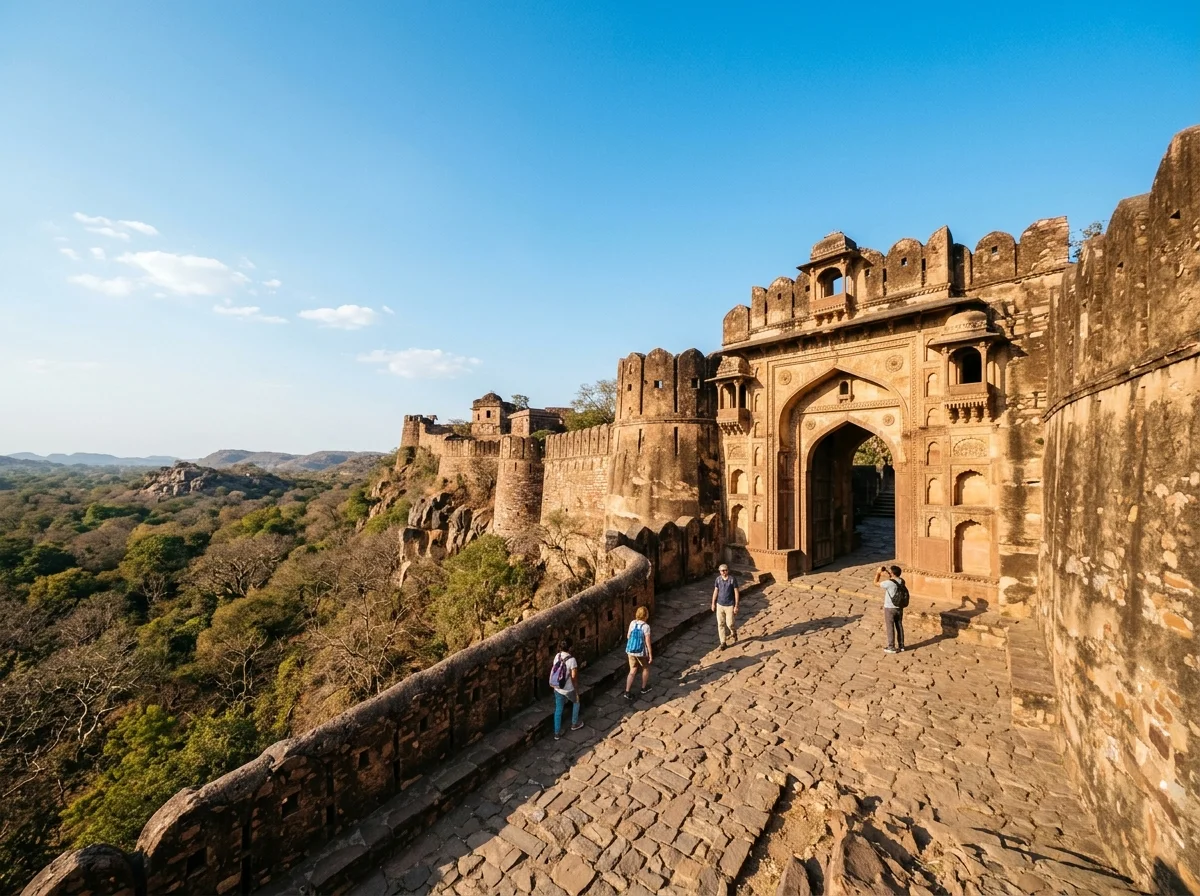
Zones two, three, and four are traditionally considered the strongest for tiger sightings because they combine open lake terrain with the kind of cover tigers favour for daytime rest. Winter mornings tend to bring tigers out to bask near water, while the hotter months before the monsoon often push them toward the lakes for longer stretches of the day, which can actually make sightings easier despite the heat. The park itself closes for the monsoon from roughly July through September and reopens in October, so if you are mapping out a trip, it is worth checking the exact Ranthambore National Park timings and entry fee details before booking your safari slots, since gate times and zone allocations shift slightly across seasons. We help guests book their jungle safari slots directly, and if you have a day to spare beyond tiger tracking, it is worth building in time for the fort and temples covered on our sightseeing page, or even a day trip on the Chambal safari for a change of terrain and a chance at gharials and river birdlife.
What Our Videos Show
The footage our guests and naturalists have captured over the past year gives a good sense of how varied a Ranthambore sighting can be. In one clip, a tigress moves unhurried along the edge of Malik Talao while a group of sambar deer freeze and watch from a safe distance. In another, two sub-adult cubs play-fight near a rocky outcrop while their mother rests nearby, seemingly unbothered by the line of jeeps parked at a respectful distance. A third video, filmed near dusk, shows a tiger walking directly across the safari track in front of our vehicle, close enough that the guide’s voice on the recording drops to a whisper. These are not staged encounters. They are the ordinary, extraordinary mornings and evenings that happen when a reserve this dense with wildlife is given the protection it needs to recover. You can browse more of these moments in our gallery, and for more Ranthambore travel guides like this one, our blog covers everything from safari zones to seasonal planning.
Plan Your Own Tiger Sighting
Staying close to the park changes what a safari trip actually feels like. From Ranthambore Nature Camp it is a short drive to the main gate, which means less time on the road and more time for an early start when tigers are most active. Our Deluxe Rooms, Super Deluxe Rooms, and AC Swiss Camps are built to keep you comfortable after a long game drive, with the guava orchards around the property offering their own quiet wildlife in the mornings and evenings. Whether you are visiting for your first tiger sighting or returning to track a favourite individual like Riddhi or Shakti through her territory, our team can help you plan safari zones and timings around the best odds for the season you are travelling in. Get in touch with us to start planning your stay, and bring back a tiger video of your own.